Core Technologies · Instruction Set

Instruction Set

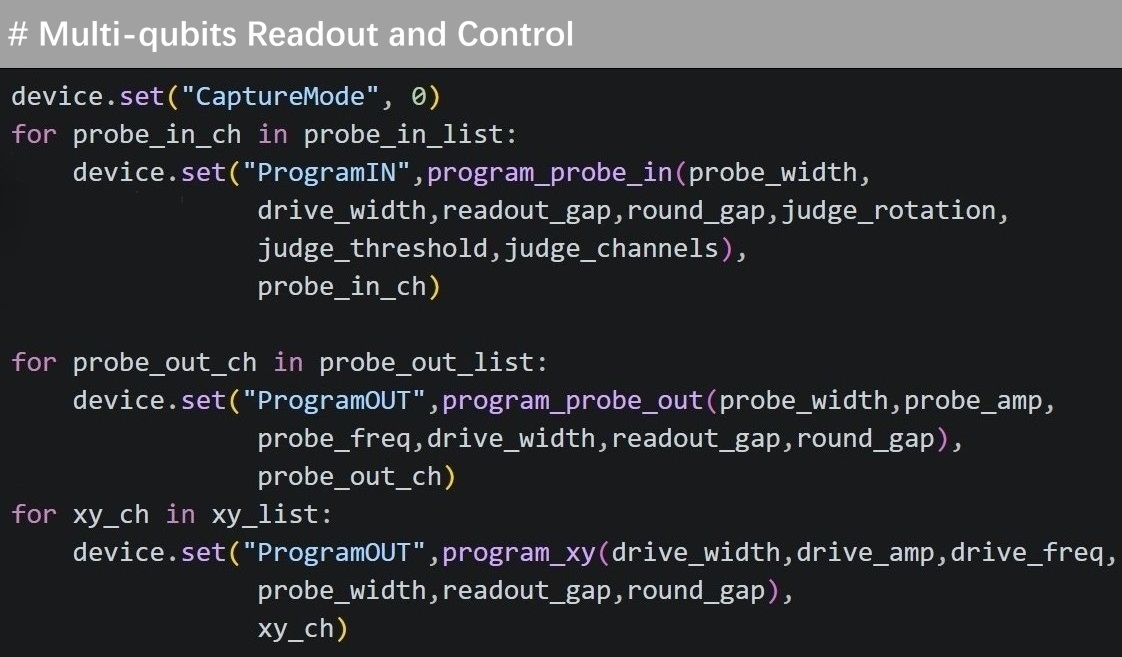
Power Quantum features a unique pulse-level programming language, NSQC. Built as a FPGA-based instruction set, NSQC unifies classical computing with pulse timing control, allowing users to freely combine pulse units for qubit calibration and quantum gate operations via a Python API. With NSQC, you get nanosecond-level real-time feedback and seamless scalability from a single qubit to thousands.

Timing Resolution
4ns
Feedback Latency
≤280ns
Channel Support
1000+
Instruction Set

Highlights

Unified classical computing and pulse timing control within a single programming framework

Flexibly combine pulse timing to implement quantum experimental operations

Sub microsecond real time feedback enables high efficiency experiments

Seamless scalability from a single qubit to over one thousand qubits

Classical and pulse timing co-programmable

Designed for unified programming

Quantum computing demands both classical data processing and real time pulse control. Unlike traditional programming models that keep classical code and quantum control separate, the NSQC instruction set brings classical computation and pulse timing control together in one unified framework.

NSQC leverages Python ecosystem for complex algorithms and flow control, while using the @kernel decorator to designate functions that execute on FPGAs for precise pulse timing and waveform control. There is no need to split tasks across heterogeneous environments. One framework delivers complete coverage from classical processing to quantum pulse control.
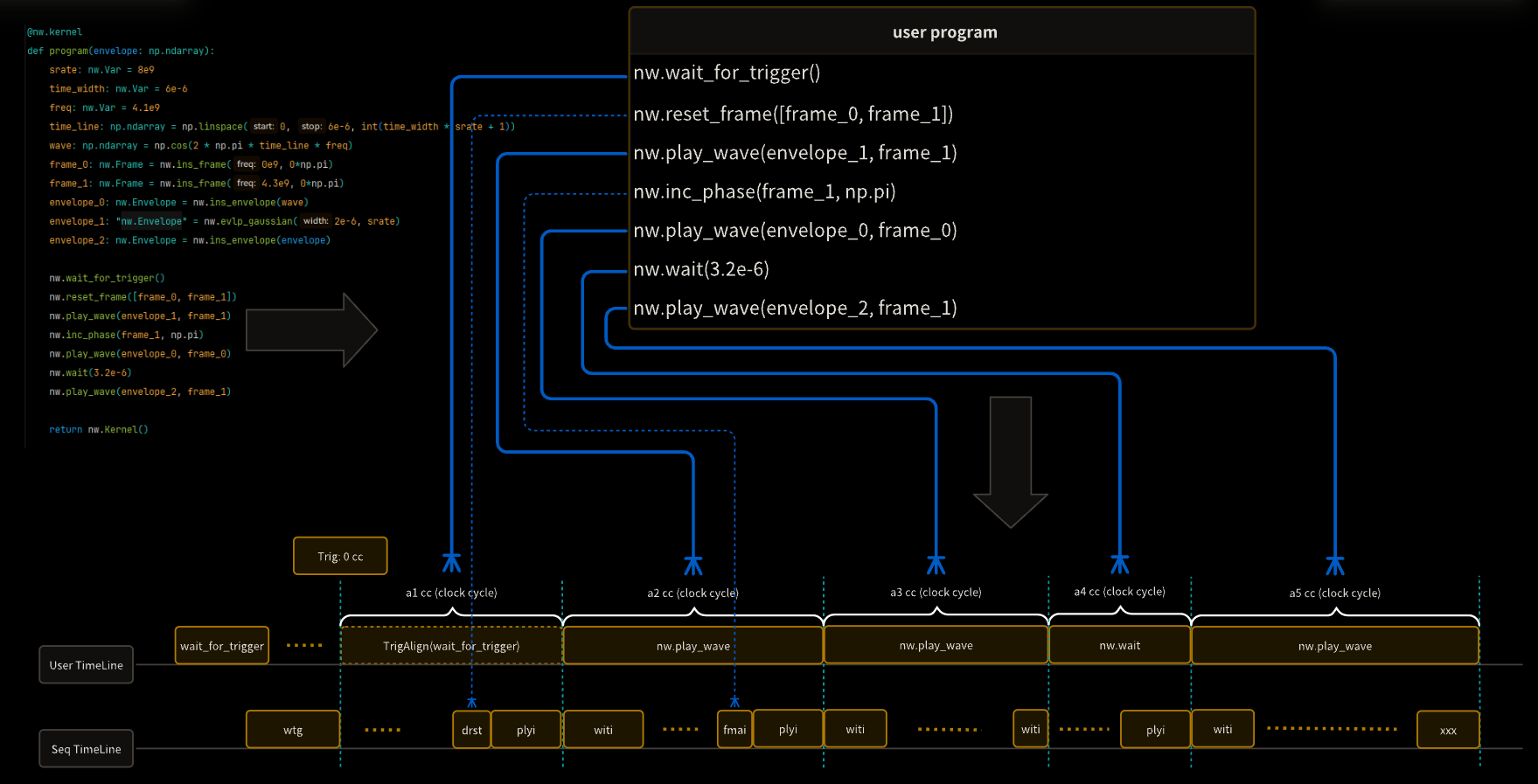
There is more than one way to implement quantum gate operations. Traditional programming models with fixed gate libraries struggle to meet diverse experimental needs.

The NSQC instruction set allows users to treat individual pulses as the smallest building blocks, freely combining them through timing orchestration to construct arbitrary quantum gate operations or customized experimental sequences, such as two-qubit entanglement gates, Ramsey experiments, and custom calibration pulse sequences. This pulse-based construction model enables rapid prototyping of new control schemes, as well as compensation and optimization for non-ideal characteristics of quantum hardware.
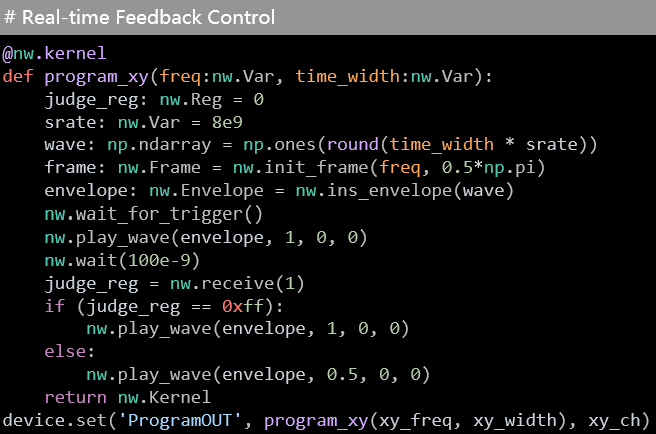
Real time feedback and effortless expansion

Design for real-time large-scale systems

Real time decision making is essential for feedback control and parameter adaptive scanning. Traditional host based processing suffers from millisecond latency, which falls short of these demands.

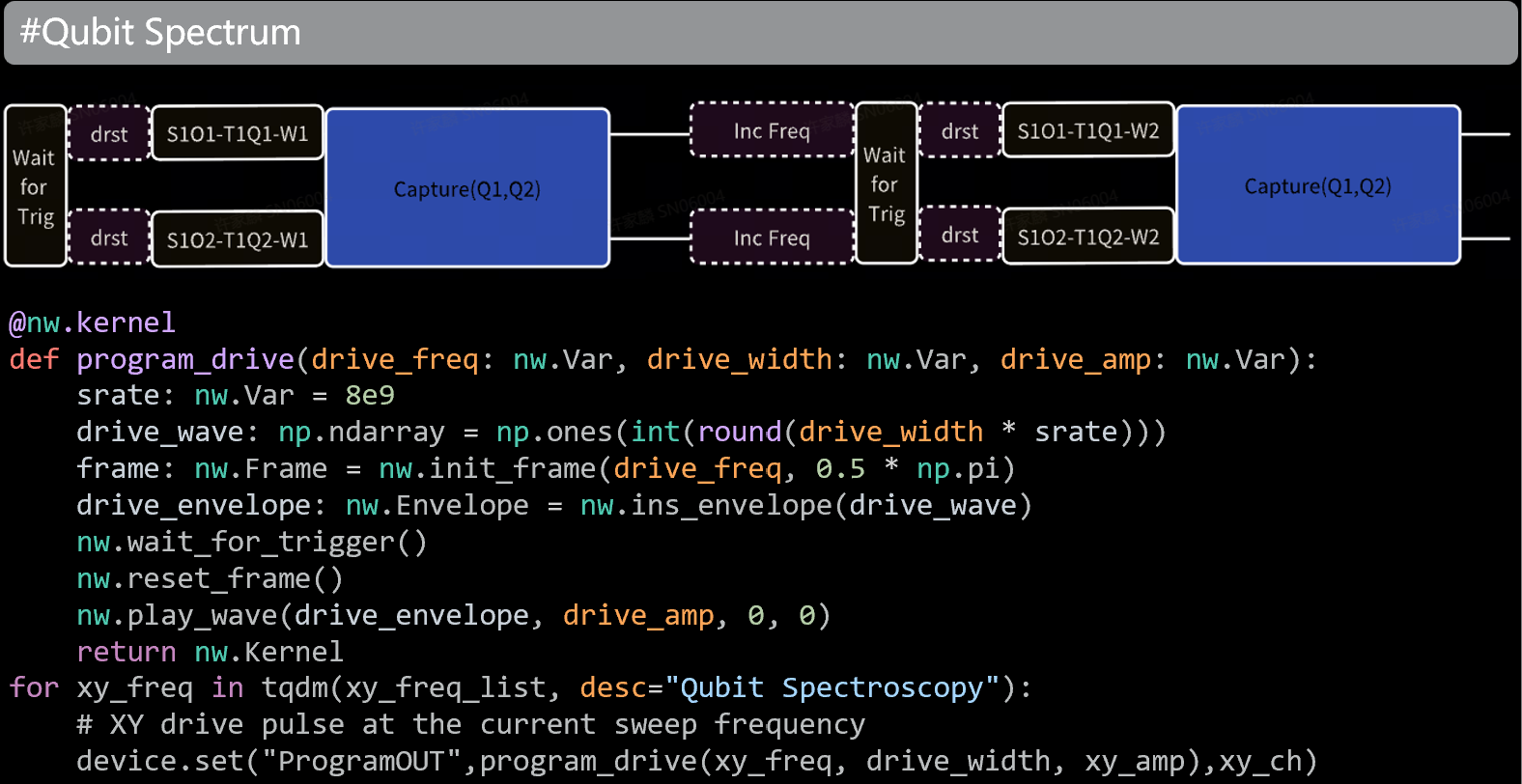
The NSQC instruction set enables real time feedback path switching and pulse waveform output based on measurement results, compressing feedback latency to the sub microsecond level. This allows the full sequence of measurement, decision, and feedback to complete before quantum states decohere, significantly improving quantum error correction fidelity while accelerating parameter scanning experiments by several orders of magnitude.

As quantum computing scales toward thousands of qubits, traditional control schemes often face architecture redesign and complex timing management when qubit count increases.

The NSQC instruction set eliminates this barrier with a unified framework that requires no changes to control code. Simply adjust configuration parameters to seamlessly migrate from small scale single qubit experiments to large scale systems with over one thousand qubits. This scalable design dramatically reduces software reengineering costs during system expansion, ensuring a smooth transition from laboratory prototypes to engineered production systems.