Superconducting
High-performance modular measurement and control solutions tailored for scalable qubits, providing the core infrastructure for the large-scale expansion of quantum computing.
Connect salesBackground Introduction
Superconducting quantum computing is currently one of the most promising technological routes for realizing quantum computation. It achieves the evolution and computation of quantum states by manipulating superconducting qubits in a cryogenic (mK-level) environment.
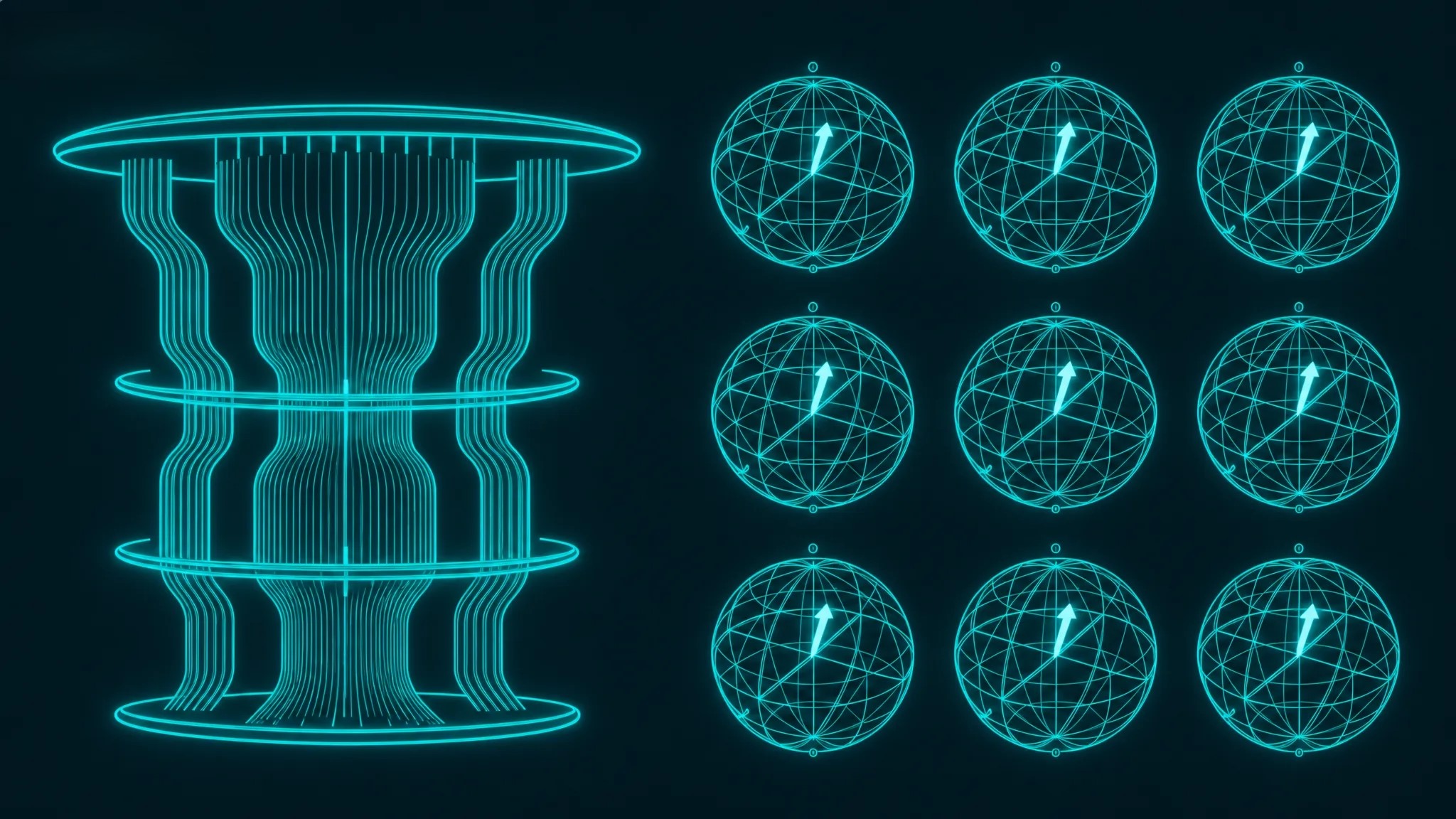
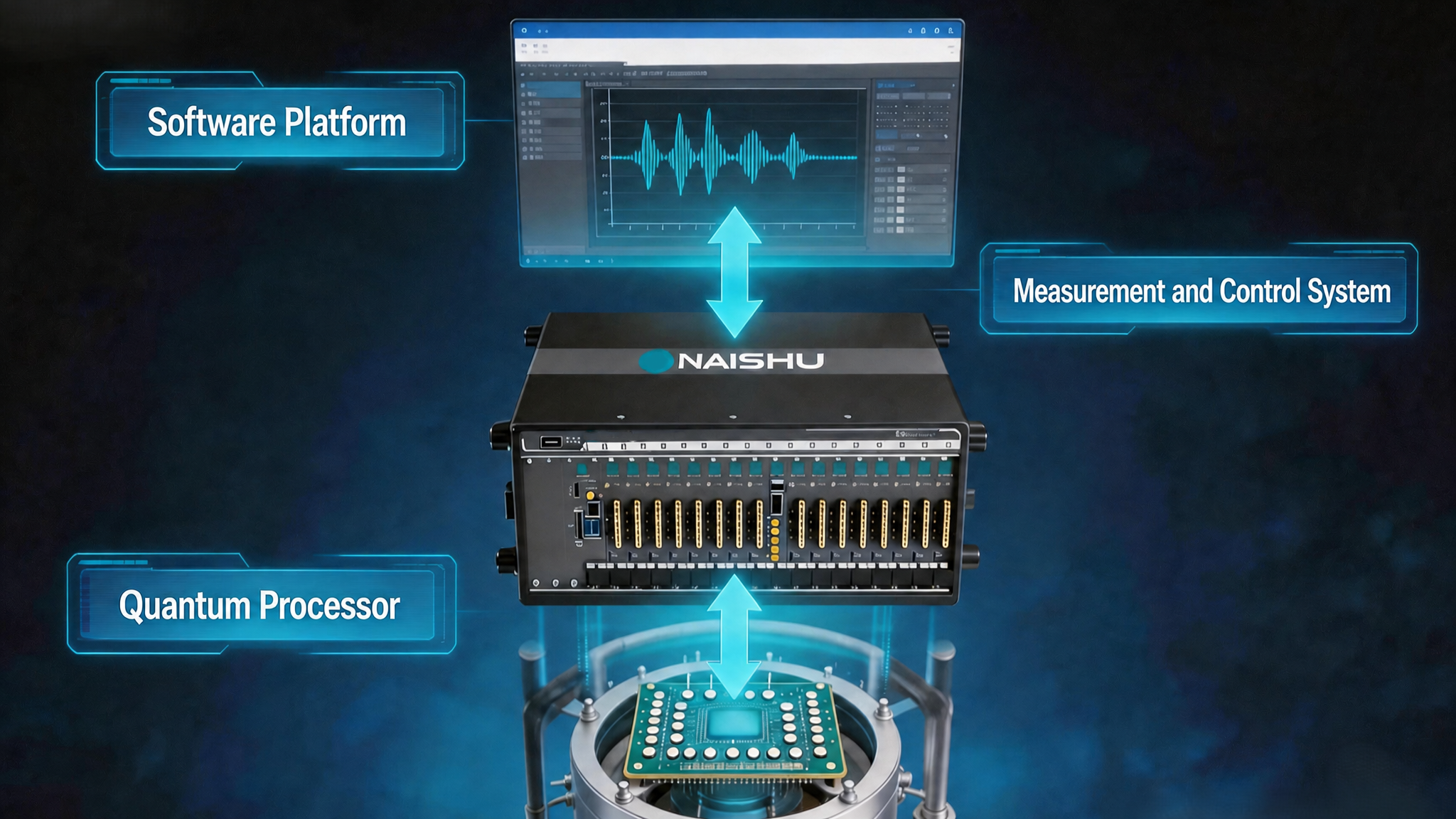
The measurement and control system serves as the core peripheral equipment of a superconducting quantum computer—acting as its "central nervous system". It is responsible for high-precision microwave pulse control and state readout, directly determining the system's performance and scalability.
Pain Points of Traditional Solutions
Low Integration
Traditional setups rely on multiple independent benchtop instruments, leading to large volumes and complex wiring. As qubit numbers increase, system size grows exponentially, hindering large-scale expansion.
Software Incompatibility
Instruments from different vendors use isolated software without unified API standards. This hinders multi-device coordinated control, complicates workflows, and drastically reduces debugging efficiency.
Complex IQ Mixing
Traditional approaches require complex IQ mixing chains for microwave signals, with tedious debugging and manual calibration for offsets and crosstalk—leading to high maintenance costs and poor long-term stability.
Functional Limitations
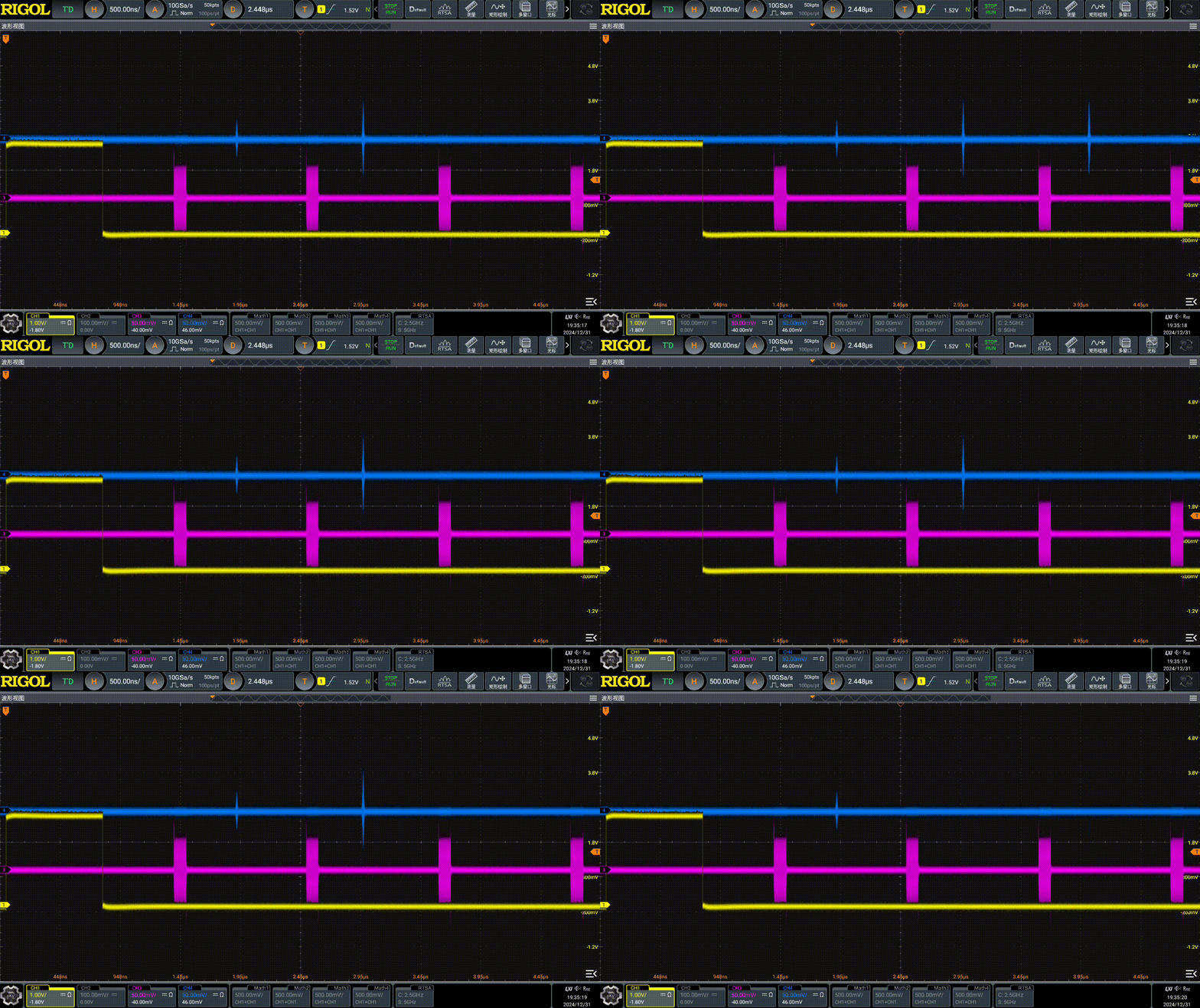
High transmission latency in standard tabletop instruments restricts low-latency real-time feedback control, failing to meet advanced measurement and control experiment requirements like active reset and error correction.
NAISHU Modular Solution
Standardized Architecture The NAISHU SPQ series adopts a standardized PXIe modular architecture. The system consists of a PXIe chassis, a CPU controller, a clock/trigger module, and flexibly configurable functional slots.
Cable-Free Interconnect Featuring a cable-free backplane interconnect design, users can flexibly mix and match modules based on experimental needs via standardized slots—paying only for required features.
Future-Proof & Easy Maintenance Local upgrades can be seamlessly integrated as higher-performance modules are released, fully protecting the user's investment. Single-module failures can be quickly replaced without overhauling the entire system.
Industrial Reliability Chassis and modules are built strictly to industrial standards, ensuring high reliability, high MTBF (Mean Time Between Failures), and a stable operational guarantee for demanding quantum experiments.
Why NAISHU?
RFSOC DDS Direct Generation
Utilizing RFSoC-based Direct Digital Synthesis (DDS) technology, microwave control signals are directly generated in the second Nyquist zone of high-sampling-rate DACs. This eliminates traditional IQ mixing chains, greatly simplifying system complexity and averting extra mixing noise.
Extreme Performance Metrics
Refined noise suppression designs achieve an ultra-low noise power spectral density of -160dBm/Hz. Phase noise reaches -117dBc/Hz@1KHz, dropping to -124dBc/Hz with an external clock. Independent temperature control guarantees 24h amplitude drift <1‰ and phase drift <3ps.
Low-Latency Instruction Set Control
PCIe 3.0 high-speed interconnection supports 10Gbps board-to-board communication and P2P direct access, achieving 6.6GB/s bandwidth and an ultra-low latency of 20us. Natively supports instruction set programming and dynamic inter-module feedback routing for real-time control.
Related Publications
- Cosmic-ray-induced correlated errors in superconducting qubit array
- On-demand shaped-photon emission based on a parametrically modulated qubit
- Multipurpose architecture for fast reset and protective readout of superconducting qubits
- Quantum Computation of Conical Intersections on a Programmable Superconducting Quantum Processor
Explore More with NAISHU: Qubit Active Reset
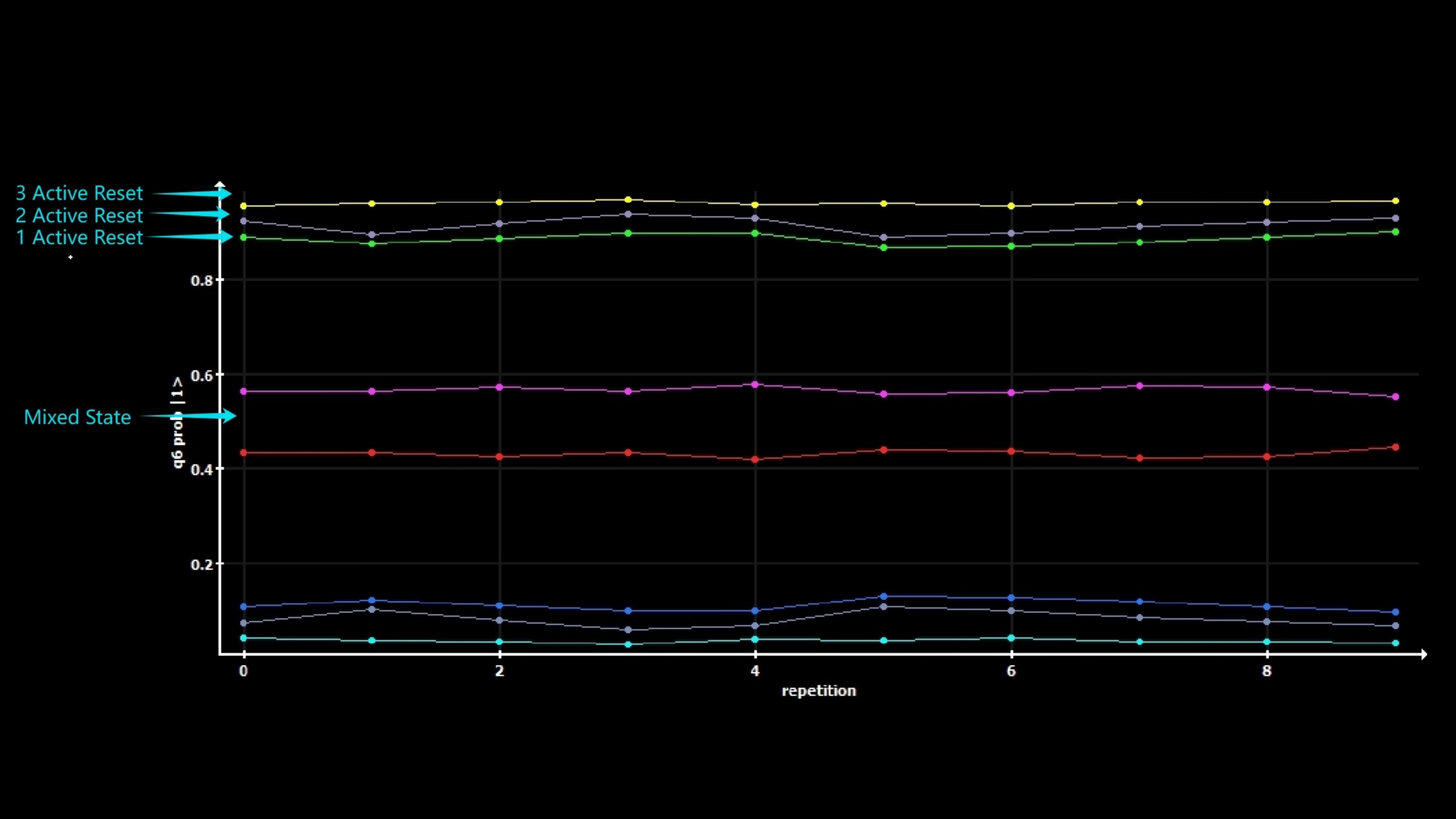
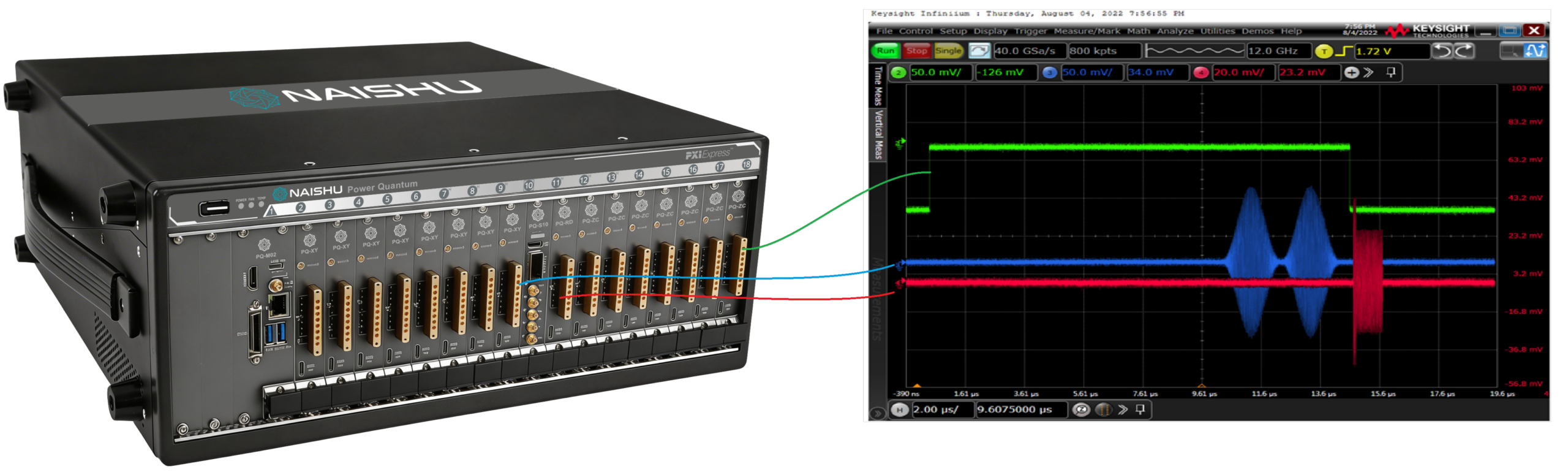
Leveraging NAISHU's low-latency inter-module feedback capability, users can effortlessly implement qubit active reset experiments. Active reset technology rapidly returns the qubit to its ground state immediately after readout, drastically shortening the repetition cycle of quantum experiments and boosting experimental efficiency multiple times over. With PXIe star topology, NAISHU system supports active reset driven by NSWAVE instruction set—no hardware modification needed, pushing the boundaries of quantum exploration.